
GAP Group Plans to Deliver 250 Studio Apartments in Dholera by End of 2026
GAP Group plans to deliver around 250 studio apartments, along with a co-working space and food court, in Dholera by the end of 2026.
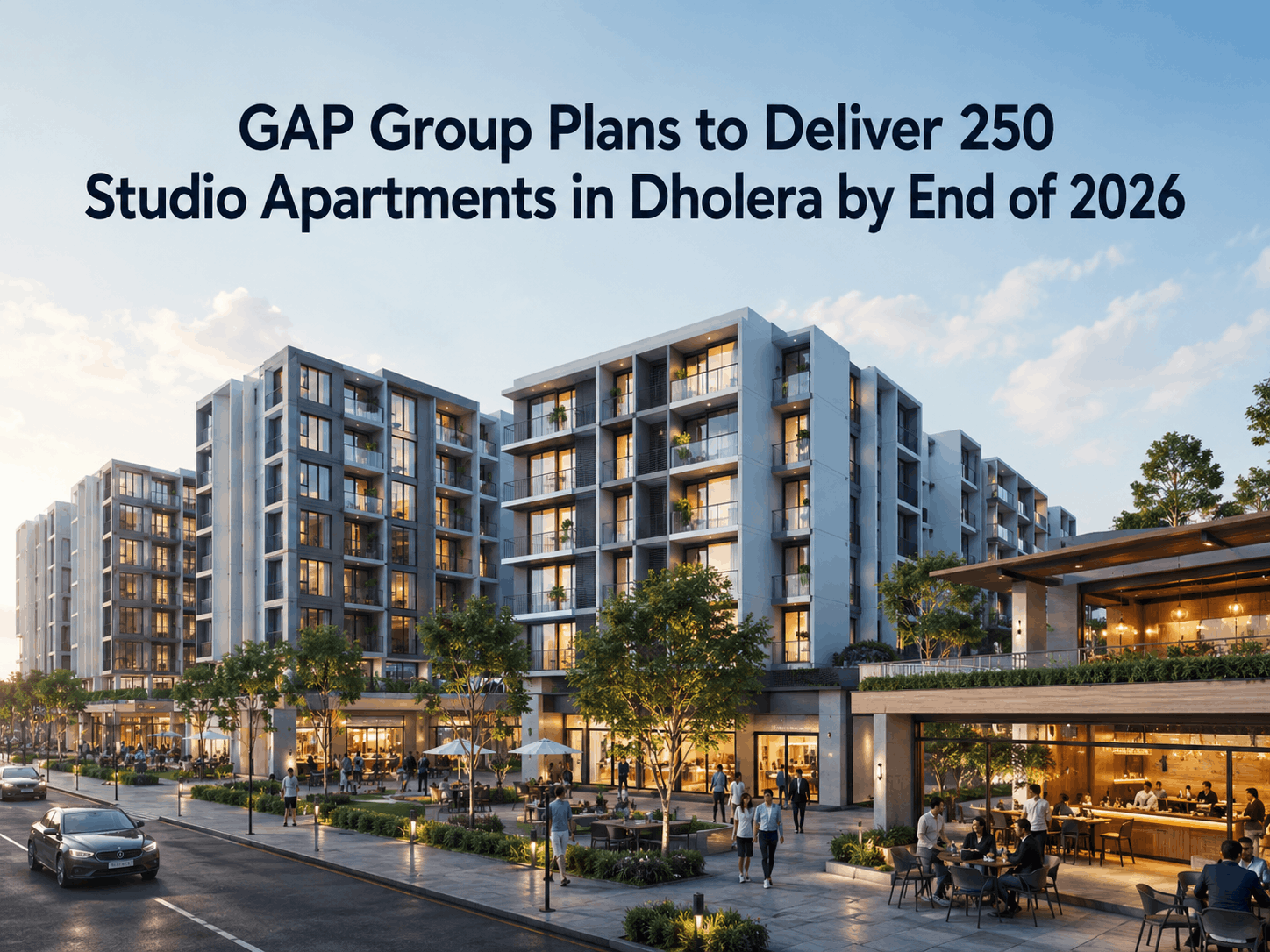
Dholera's real estate market is moving further towards built residential and commercial development, with GAP Group planning to deliver around 250 studio apartments by the end of 2026.
Gopal Goswami, Founder and Chairman of GAP Group, shared the update during a recent interaction with ETRealty. Along with the residential units, the group is also preparing to deliver a co-working space and food court as part of its expanding presence in Dholera.
The development reflects a broader shift taking place in Dholera. While the region has traditionally attracted attention for plotted land and long-term investment, construction activity is increasingly moving towards apartments, offices, hospitality, retail and other facilities required by people and businesses entering the smart city.
According to Goswami, demand is emerging across several real estate segments as Dholera develops its industrial and urban ecosystem. Housing, hotels, restaurants, offices, warehouses, grocery stores and industrial spaces will all become increasingly important as employment and business activity grow in the region.
GAP Group already has an established development pipeline in the area. Publicly available project records also show residential and mixed-use activity associated with the group in and around Dholera, adding to the city's transition from primarily land-based investment towards actual built infrastructure.
The planned delivery of studio apartments could be particularly relevant as Dholera attracts professionals, industrial workers, investors and businesses connected with upcoming manufacturing and infrastructure projects.
Projects such as the semiconductor ecosystem, airport, expressway and other industrial developments are expected to increase the need for practical residential and commercial infrastructure over time.
The addition of co-working and food facilities alongside housing also highlights the growing demand for supporting urban amenities as Dholera develops into a more active residential and employment centre.
If the planned deliveries remain on schedule, the end of 2026 could mark another visible step in Dholera's transition from infrastructure development to increased residential occupancy and commercial activity.