Priti Adani Calls for Industry-Aligned Education to Support India’s Semiconductor Growth
At CHIPS 2026, Adani University President Priti Adani said India’s semiconductor sector needs skilled people as well as advanced fabs. She outlined planned chip design, manufacturing and packaging programmes as Gujarat’s Dholera and Sanand projects progress.

Priti Adani, President of Adani University, has said that India’s semiconductor ambitions depend on building a skilled workforce as much as on setting up advanced fabrication plants. She was speaking at the Conclave on Hardware, Innovation, Processing and Semiconductor Technologies (CHIPS) 2026, according to a company statement released on October 24, 2026.
The conclave was organised with IIT Mandi, the VLSI Society of India and law firm Cyril Amarchand Mangaldas. Semiconductor companies, academic institutions and representatives of the Gujarat State Electronics Mission attended.
In her address, Adani said technological progress depends on “how wisely we develop and use human intelligence to build a better future.” She noted that India has a strong record of producing technology professionals, saying, “India has already given the world remarkable technology talent.” She added that the country now has “an opportunity to deepen what we can design, develop and manufacture, here at home.”
She argued that a domestic semiconductor industry cannot rely on manufacturing facilities alone. It also needs engineers, researchers and technicians who are trained for the needs of the sector. Her remarks focused on closer links between education and industry, so that academic programmes match the skills chip companies require.
Adani said Adani University is developing a multidisciplinary global campus in Ahmedabad, Gujarat. Describing its goal, she said, “our ambition is to bring education, research and industry together to solve real challenges.” She also said the university aims to “connect academic knowledge with practical innovation.”
According to the statement, the university plans to build expertise in semiconductor chip design, manufacturing and packaging. Its planned initiatives include specialised programmes for young engineers, executive education for working professionals and faculty development. The aim is to align research and training with industry requirements. The statement did not give details on investment, enrolment, campus size or the timeline for these programmes.
Her remarks are relevant to Gujarat because of the semiconductor projects under way at Dholera and Sanand. Dholera, in the Dholera Special Investment Region, is the site of Tata Electronics’ semiconductor fabrication plant, which is being built in partnership with Taiwan’s Powerchip Semiconductor Manufacturing Corporation. Reports in October 2026 said this fab remains under construction and has not yet started wafer production. Sanand hosts semiconductor assembly and testing projects.
As these facilities move closer to operations, they will need trained staff for process engineering, equipment handling, quality testing, packaging and maintenance. Semiconductor plants usually need specialised skills that general engineering courses may not fully cover, so industry-linked training programmes are seen as an important part of building a chip ecosystem.
The rapid growth of artificial intelligence is also raising demand for advanced chips, data centres and reliable power infrastructure. This adds to the need for trained semiconductor professionals in India.
The India Semiconductor Mission continues to support the sector through incentives for fabrication, assembly and testing projects across several states. Institutional programmes such as those proposed by Adani University are part of a wider effort to build a talent pipeline alongside these investments.
For Dholera, the availability of skilled workers nearby will be one of the factors that shapes how quickly its semiconductor facilities can scale. The specific programmes Adani University announced are still in the planning stage, and their structure, intake and start dates have not yet been made public.
Related Articles
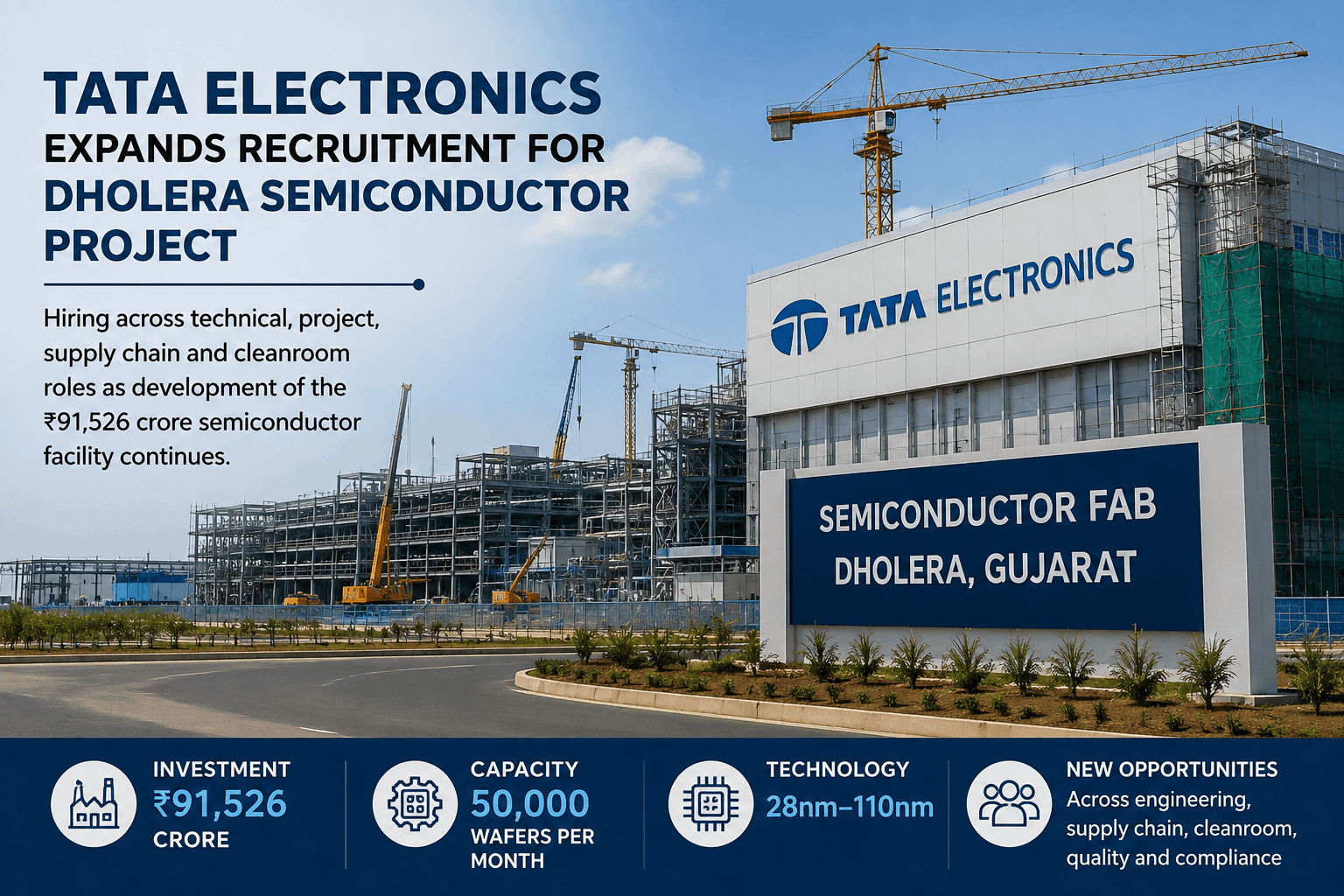
Tata Electronics Expands Recruitment for Dholera Semiconductor Project

Dholera Could Get Japan-Friendly Social Infrastructure as Semiconductor Push Expands
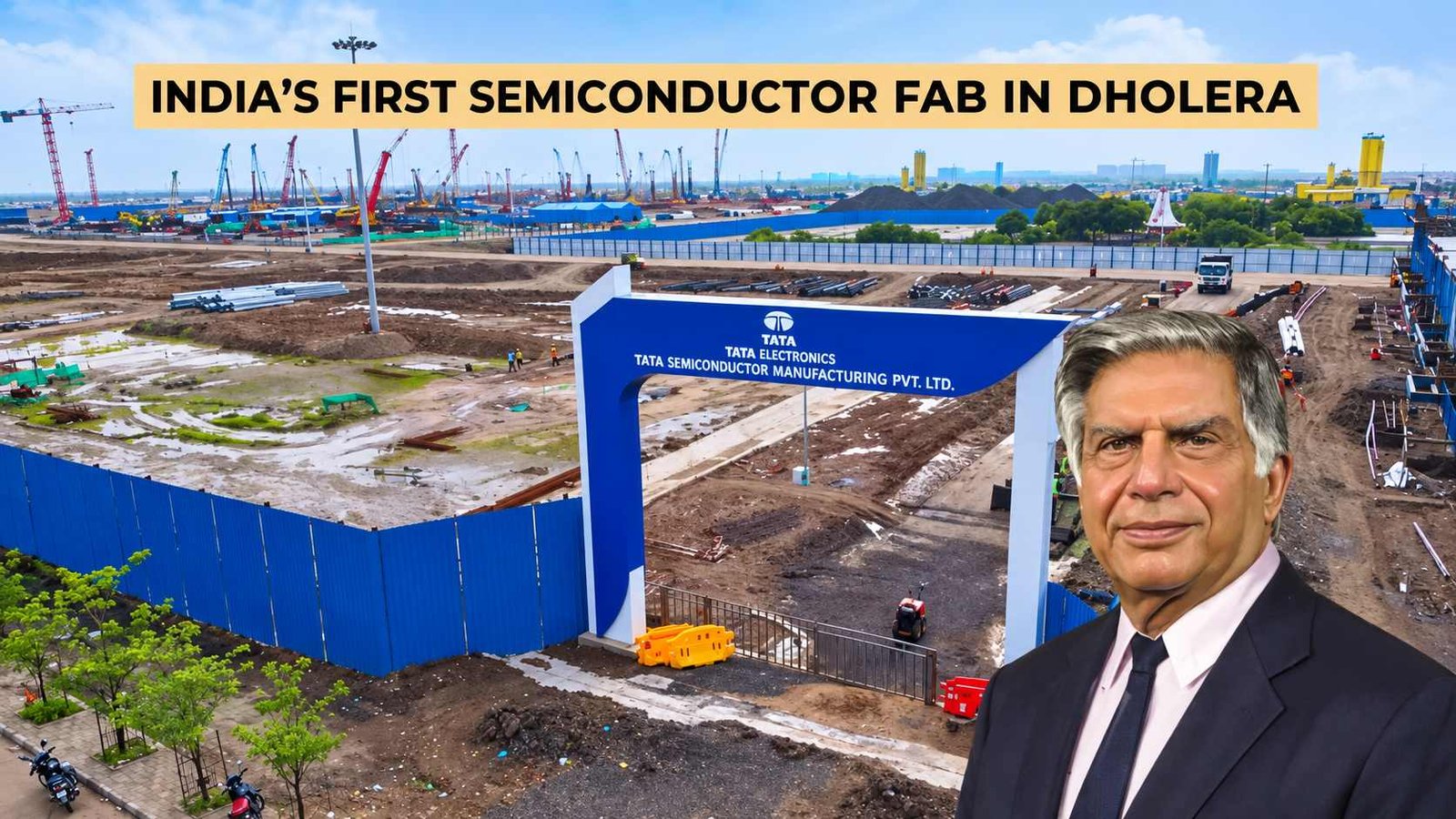
Tata Dholera Fab's Commercial Production Pushed to Mid-2028, Says Ashwini Vaishnaw