Tata’s Dholera Chip Fab Secures Early Customer Interest, Faces Production Test
Tata Electronics has six customers at different stages of engagement for its planned Dholera semiconductor fab, according to a report. The project now faces the challenge of converting early commitments into sustained wafer production.

Tata Electronics’ planned semiconductor fabrication facility in Dholera, Gujarat, has attracted early customer interest before production begins. According to a 12 October report by DIGITIMES, six customers are at different stages of engagement with the project. Three have made what a person familiar with the project described as binding offtake commitments.
The reported commitments point to potential demand for chips from the facility, but they do not establish how much of its planned capacity will ultimately be used. The publicly accessible portion of the DIGITIMES report does not identify the customers or disclose the wafer volumes, delivery schedules or terms associated with the reported commitments.
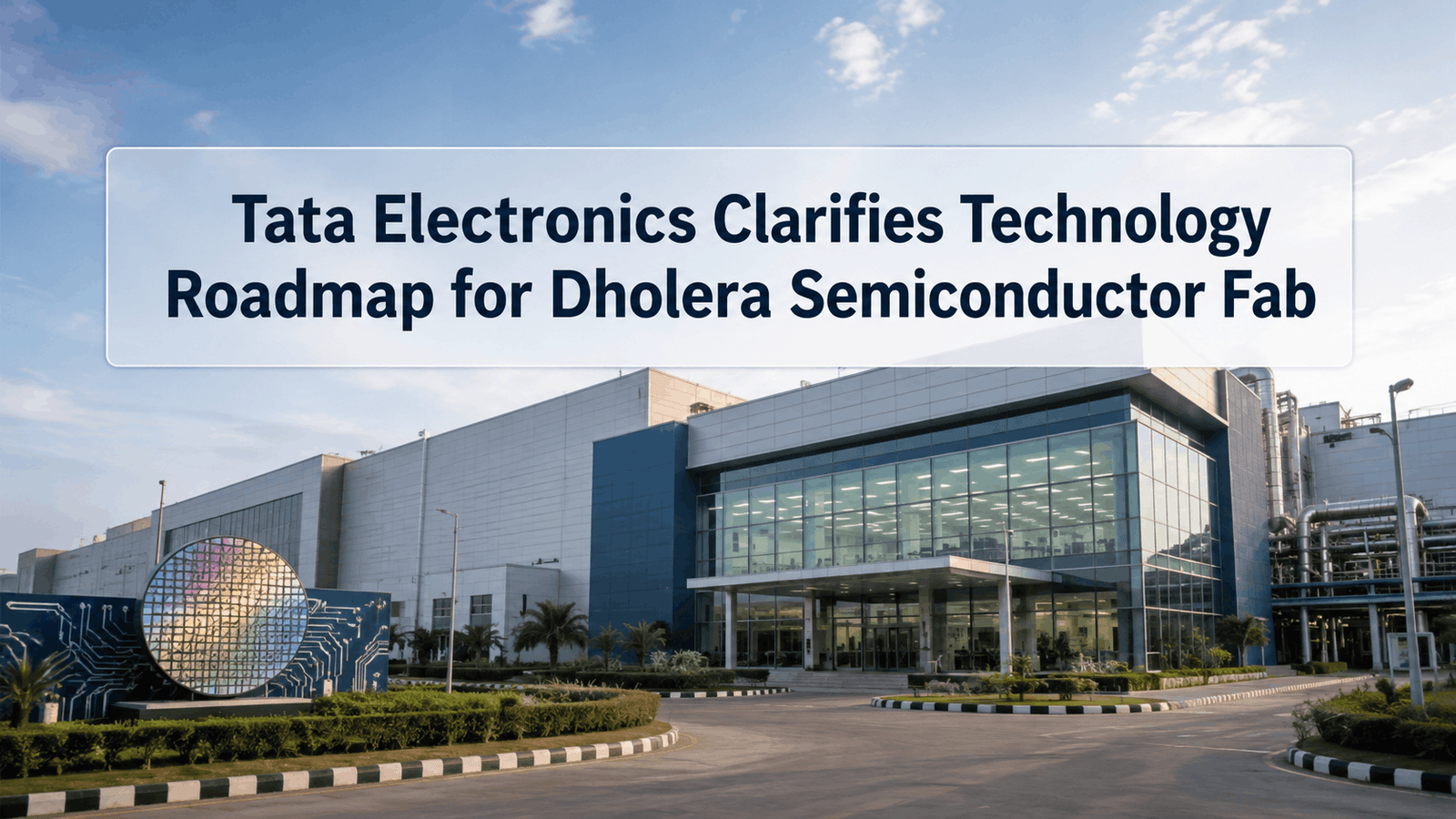
The Dholera facility is being developed by Tata Electronics in partnership with Taiwan’s Powerchip Semiconductor Manufacturing Corporation, or PSMC. Tata has described it as India’s first commercial semiconductor fabrication facility. A semiconductor fab manufactures chips on silicon wafers through a series of processing steps before the individual chips are separated, packaged and tested.
The project has an announced investment of more than ₹91,000 crore. According to the Press Information Bureau, the facility is planned to have a capacity of 50,000 wafer starts per month. Tata Electronics says the planned fab will produce analogue and logic integrated circuits using technologies ranging from 28 nanometres to 110 nanometres. These figures describe the facility’s planned capacity and technology range, rather than its current output.
Early customer commitments can help a fab developer plan production, but the nature of an agreement matters. A customer discussion, a reservation and a binding offtake commitment may involve different obligations. Without the terms of the reported Dholera agreements, it is not possible to determine when the customers would begin taking wafers or what share of the facility’s capacity they would use.
The next test for the project will be translating customer interest into qualified production and recurring deliveries. Chip manufacturing requires equipment installation, process preparation and testing before a fab can reliably produce wafers that meet customers’ specifications. Customers may also need to complete their own qualification processes before accepting chips for use in products.
Tata has said the Dholera fab is intended to manufacture chips for applications including power management, display drivers, microcontrollers and computing. Its stated target markets include automotive, computing and data storage, wireless communications and artificial intelligence. The company has not publicly identified which of these applications are linked to the customer engagements reported by DIGITIMES.
Work to develop the supporting supply chain has also been announced. In May 2026, Tata Electronics and semiconductor equipment supplier ASML announced a memorandum of understanding to support the establishment and ramp-up of the planned 300 mm fab in Dholera. In September, Tata Electronics and Fujifilm announced an agreement to develop and supply semiconductor materials for the facility.
Those announcements describe intended cooperation; they do not establish that the fab has begun commercial production. Similarly, the announced monthly capacity is a target for the facility and should not be read as a forecast of output immediately after launch.
For Dholera, the reported customer engagements offer an early indication of commercial interest in the project. The practical outcome will depend on the facility’s readiness, customer qualification and the volumes eventually ordered and delivered. As of the DIGITIMES report, the customer identities and the scale of the reported commitments remained undisclosed in its publicly accessible text.